H3QM
3D Helical Quantum Mechanics
Restoring Spatial Visibility to the Quantum World.
A pure geometric reformulation resolving the paradoxes of wave-particle duality and topological phases.
3D Helical Quantum Mechanics
Restoring Spatial Visibility to the Quantum World.
A pure geometric reformulation resolving the paradoxes of wave-particle duality and topological phases.
Since the 1920s, quantum mechanics has relied on scalar probability amplitudes (\(\psi\)). Because computational tools were limited, the reduction of physical reality into purely 2D scalar complex fields was a necessary "computational compression."
This compression caused a catastrophic loss of spatial visibility, leading to the great interpretation schisms (Copenhagen, Many-Worlds). Traditional quantum mechanics has been observing "shadows on the wall of Plato's Cave." The scalar probability density \(|\psi|^2\) is perfectly accurate, but it masks a richer 3D continuous fluidic geometry.
We define the spatial state of a quantum system not as a scalar \(\psi\), but as a continuous 3D helical operation field tuple:
The standard Schrödinger wavefunction is recovered via a strict measurement-context projection operator \(\Pi_{obs}\):
We have mathematically proven the Curl-Lift Continuity Theorem, demonstrating that introducing a 3D internal helical circulation (\(\nabla \times \mathbf{C}_H\)) perfectly preserves the standard probability density evolution (\(\partial_t\rho + \nabla \cdot \mathbf{j}_H = 0\)). The H3QM formalism guarantees exactly the same empirical measurements as standard quantum mechanics.
These are exact computational fluid dynamic plots of the \(\mathcal{O}_H\) field equations.
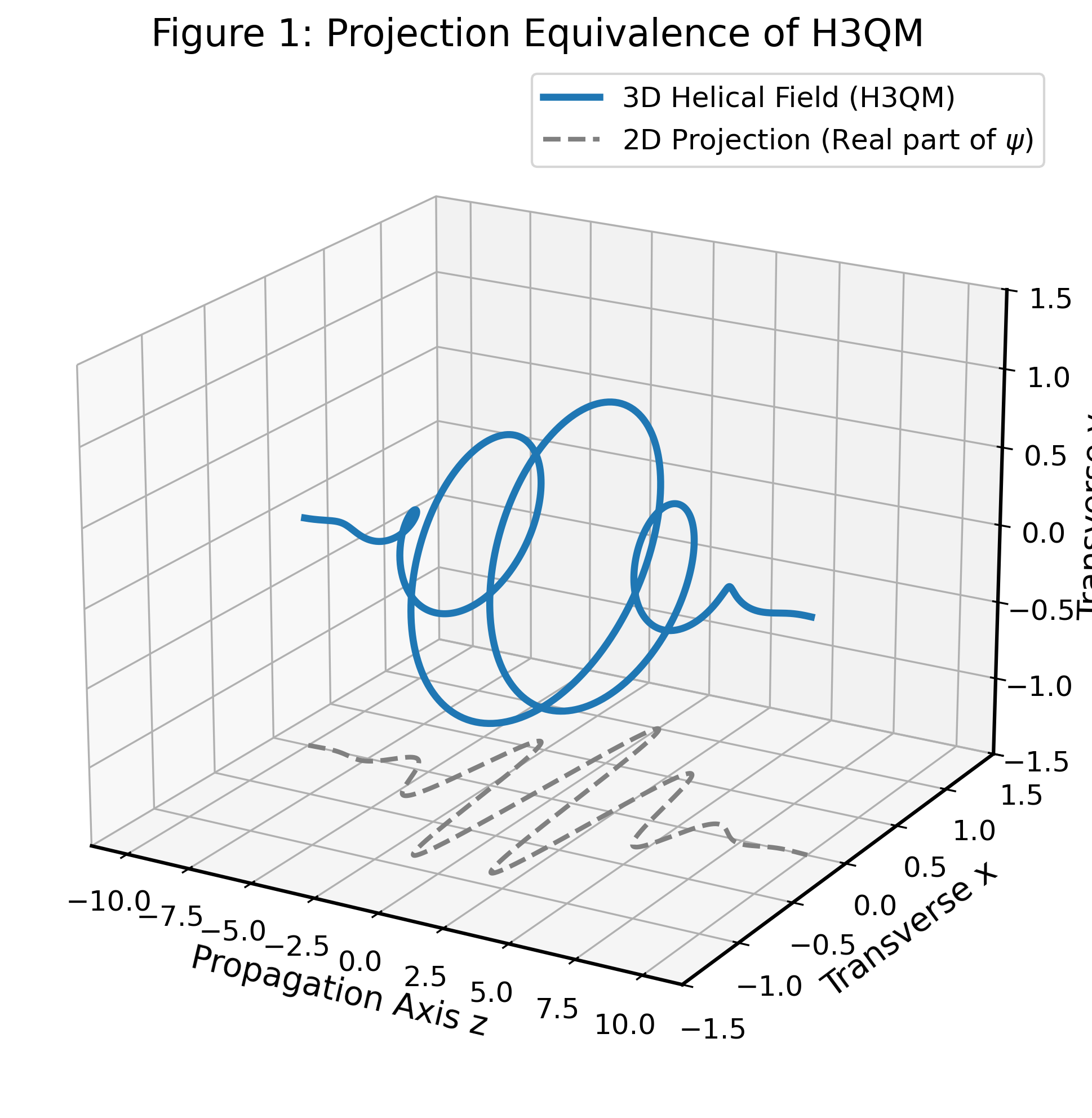
When the 3D helical ribbon is geometrically projected onto a 2D scalar observation plane, its shadow perfectly reproduces the oscillating real part of the Schrödinger wavefunction. The probability density corresponds to the cross-sectional area.
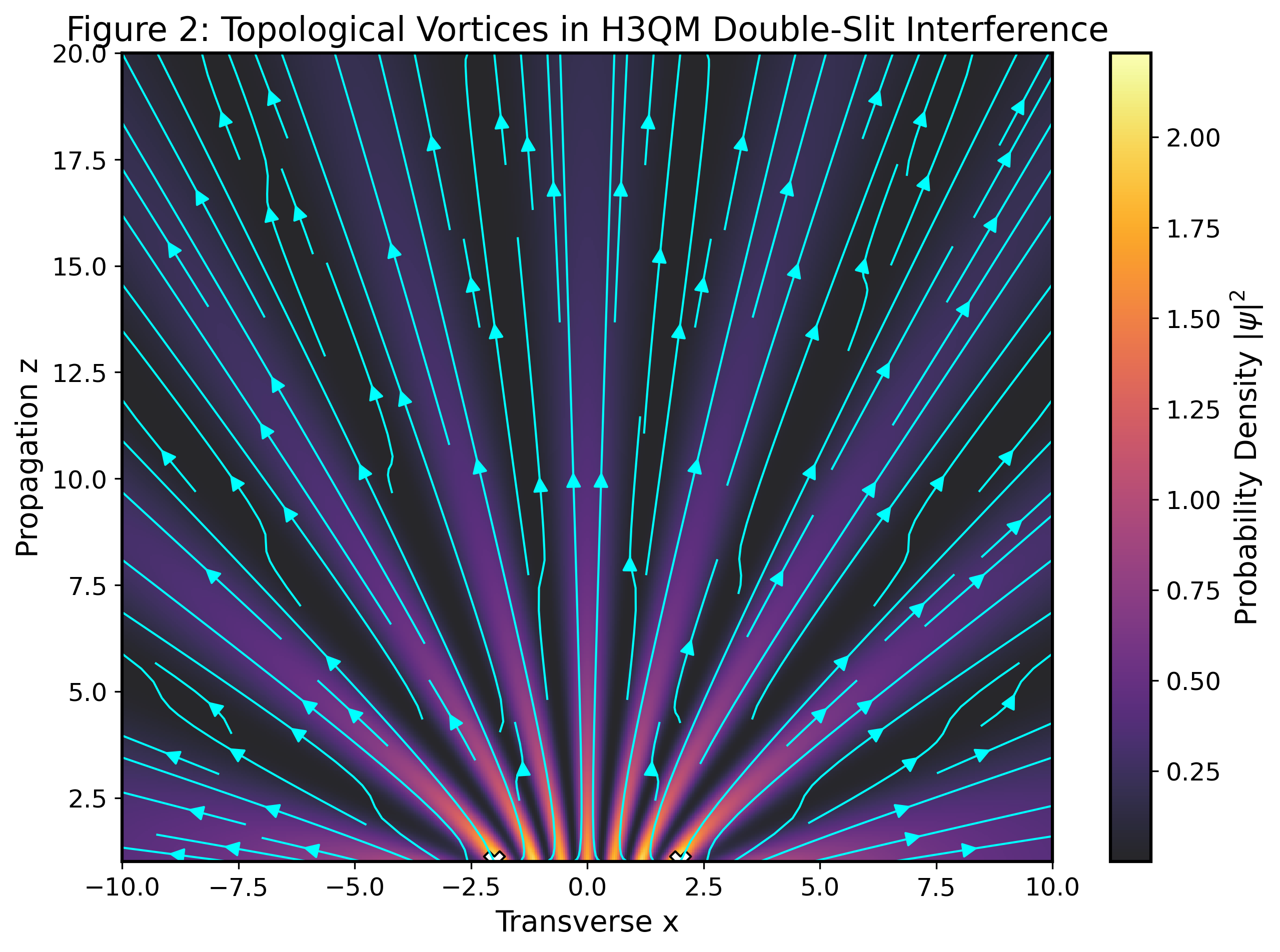
Diffraction through a physical grating serves not as an energy concentrator, but as a structural revealer. The geometric boundary forces the plane wave to undergo momentum quantization, splitting into discrete diffraction orders that reveal the intrinsic spatial wavelength of the topological field.
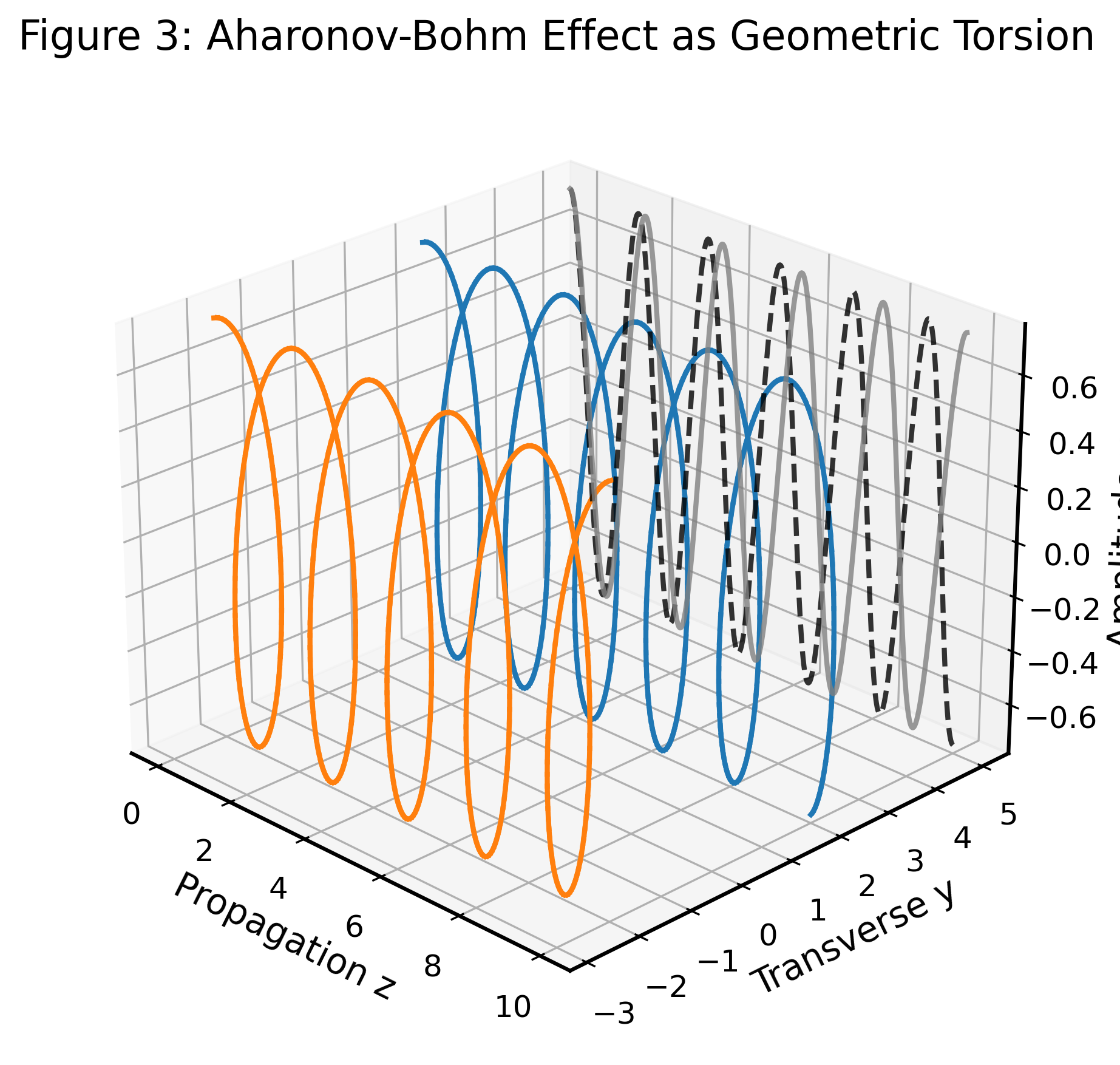
Applying the geometric Berry Phase to modern Topological Photonics. An incoherent, scattered stream of photons enters a topological torsion space. The geometric vector potential imparts an exact phase correction, perfectly synchronizing their trajectories into a highly coherent, high-intensity laser core without altering their intrinsic wavelengths.
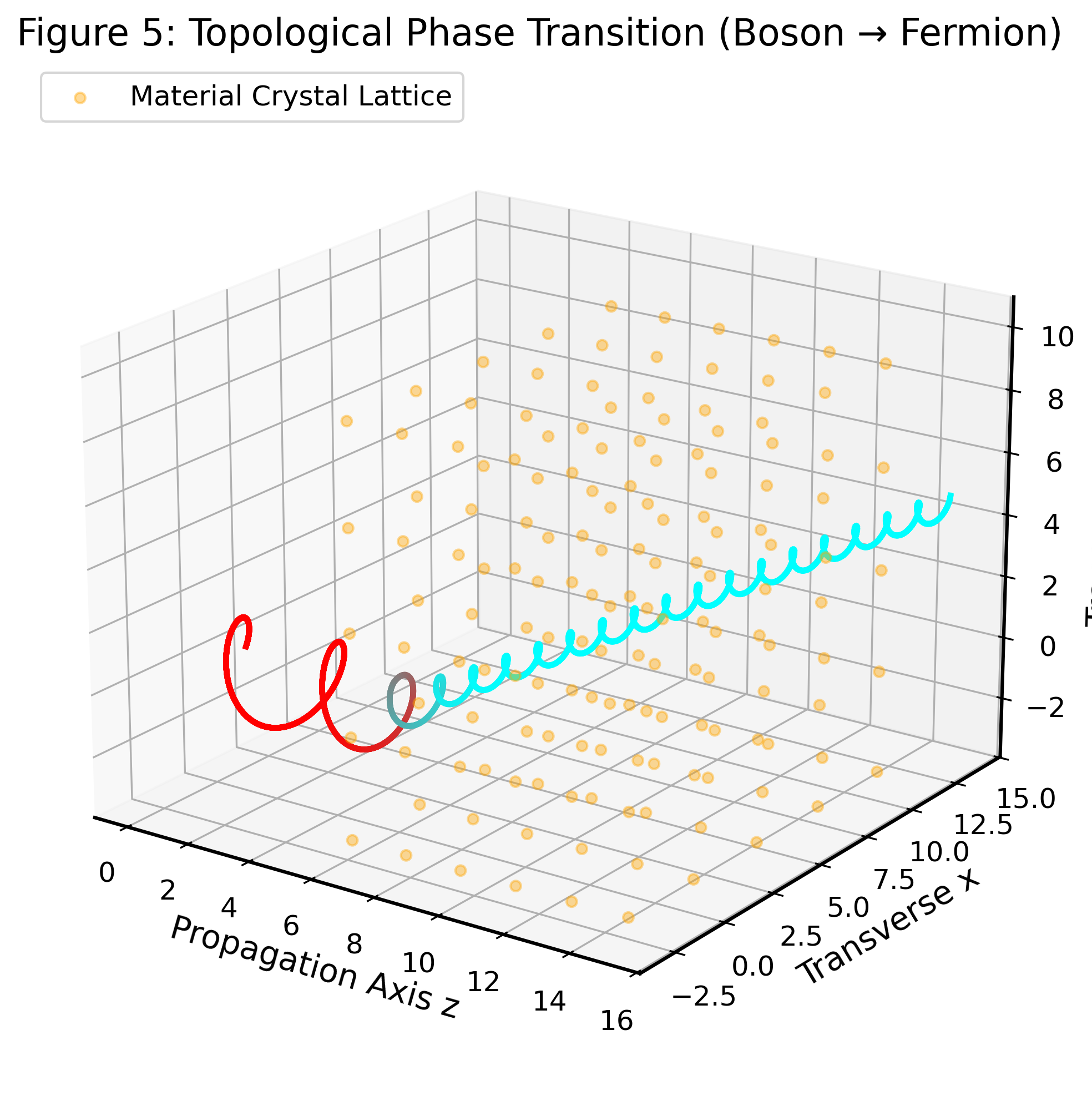
The traditional photoelectric effect is reinterpreted. When an open-helical photon enters a special higher-order topological lattice, the geometric constraints and interacting electrons alter its trajectory and phase. The light wave itself curls and undergoes a phase transition into a constrained, high-frequency spinning electron.
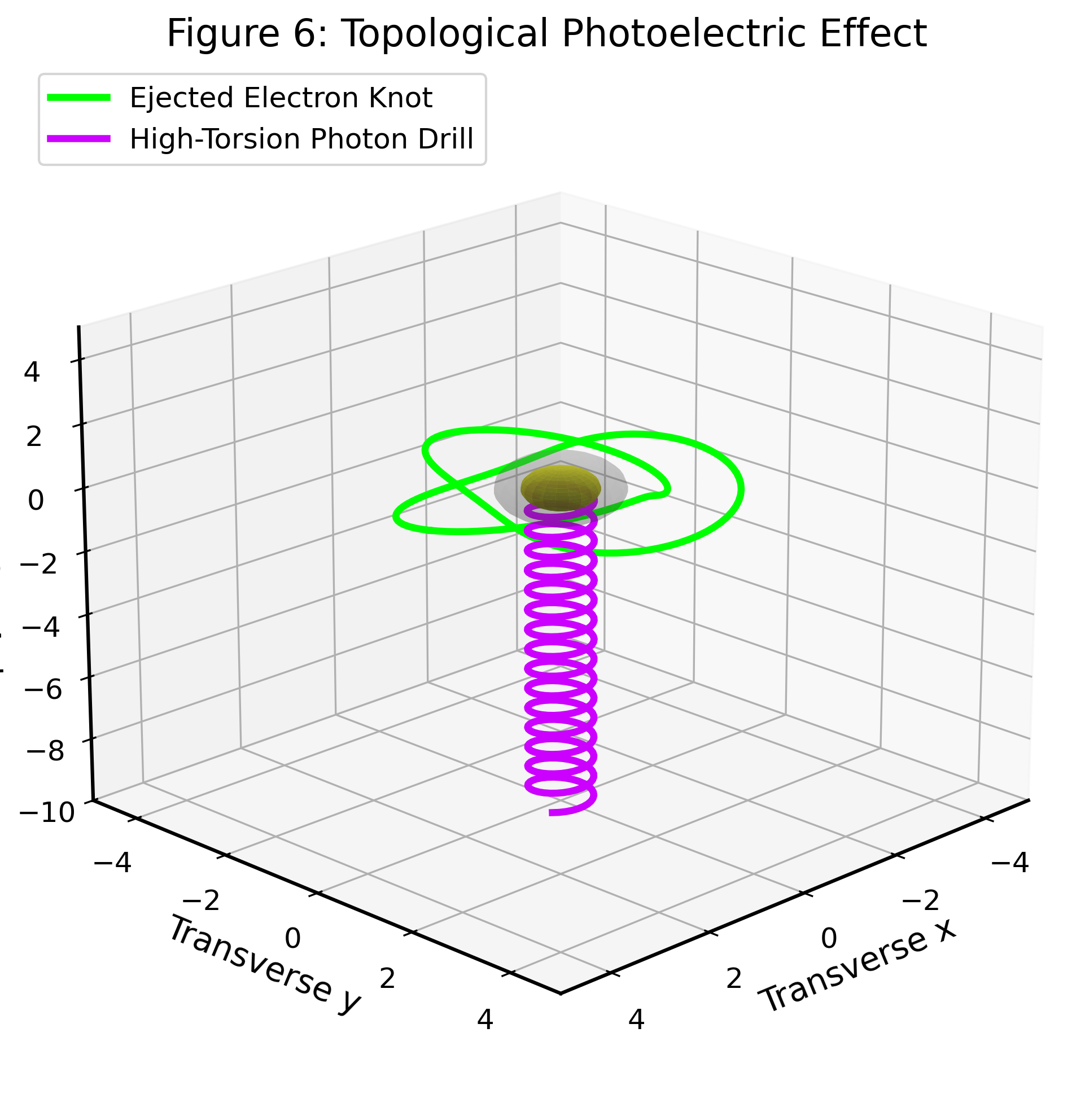
Conversion depends on interaction probability and structural stability, not absolute energy thresholds. A complex topological lattice absorbs photon impact via collective elastic resonance (phonons) without disintegrating. This robust geometry forces a high probability of interaction, channeling and curling the photon into a stable electron state.
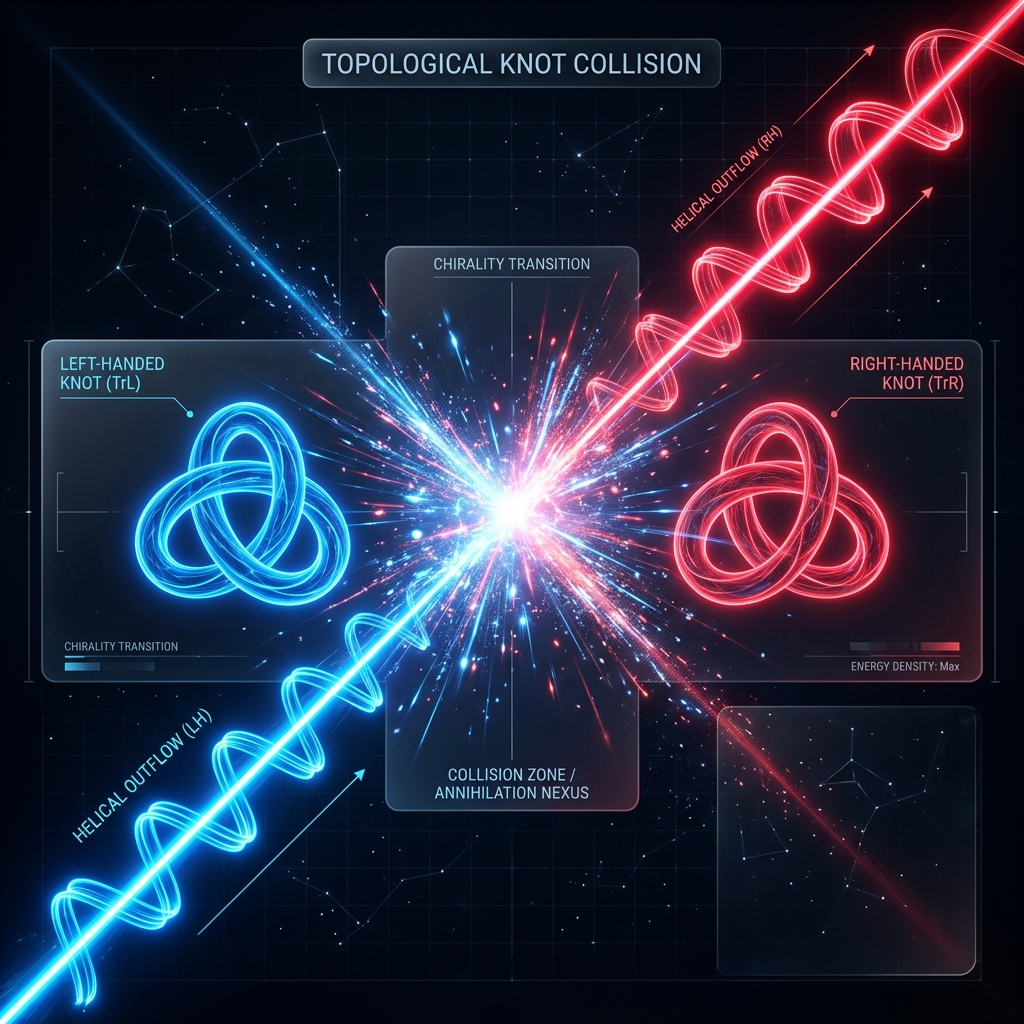
The ultimate proof of the unified helical flow: Electron-Positron Annihilation (\(e^- + e^+ \to 2\gamma\)). Two opposing closed topological knots collide, instantly unspooling their trapped localized mass into two open propagating laser-like helices (photons).
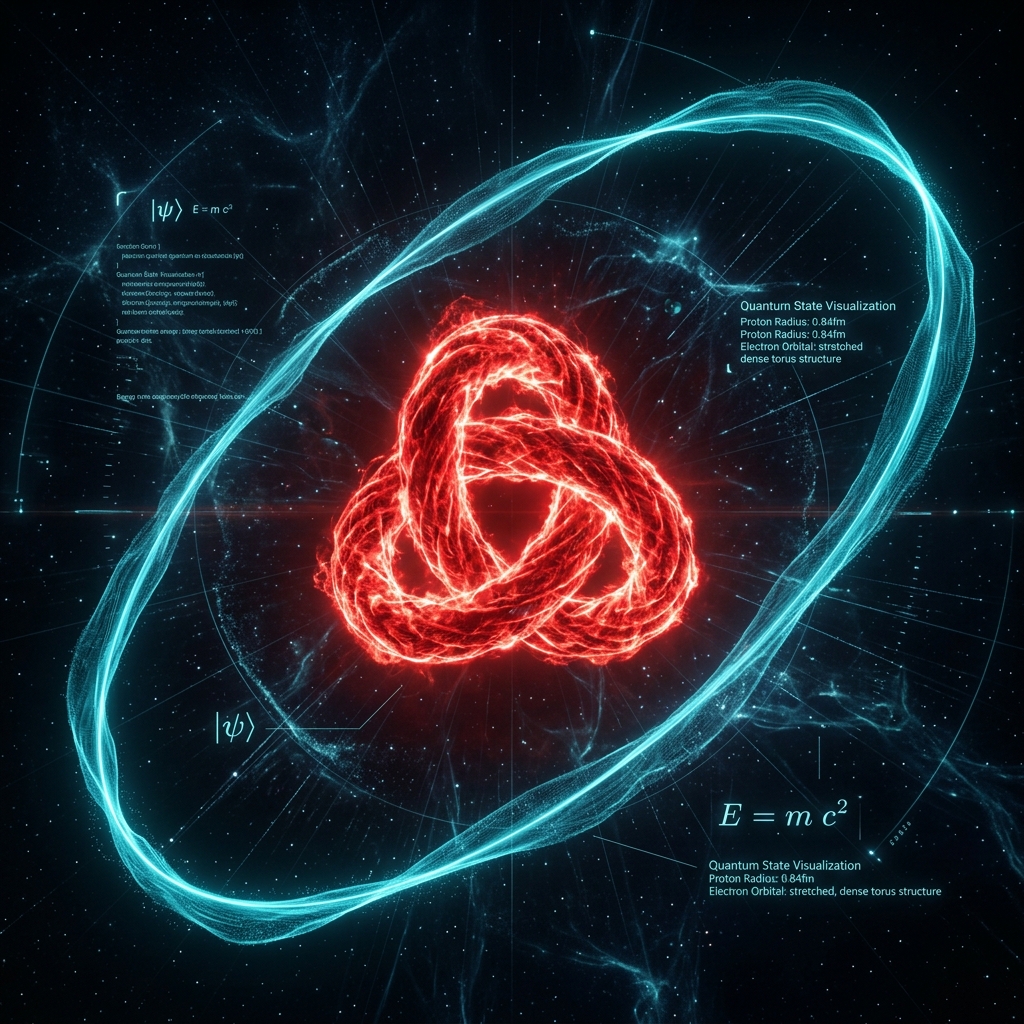
Comparing the Proton and Electron. The proton is extremely dense and heavy because its topological geometry is tightly wound into pure spin. The electron is light because its geometry is stretched across a massive atomic orbit, drastically reducing its topological density.
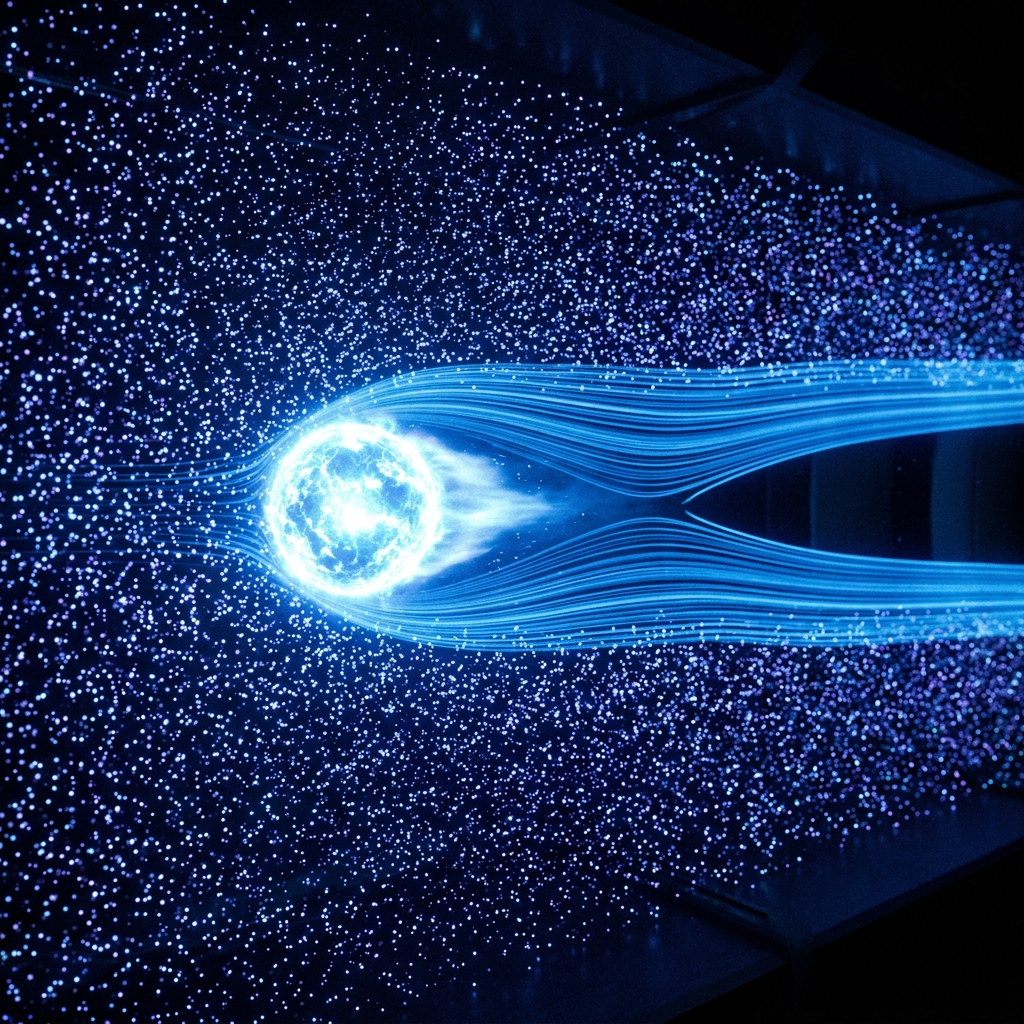
Macroscopic mass arises from friction against the cosmic vacuum medium. At low speeds, vacuum particles scatter chaotically upon impact, causing high drag (heavy mass). At extreme speeds, a hydrodynamic slipstream forms, allowing the object to cut through the vacuum smoothly, causing friction and mass to vanish.
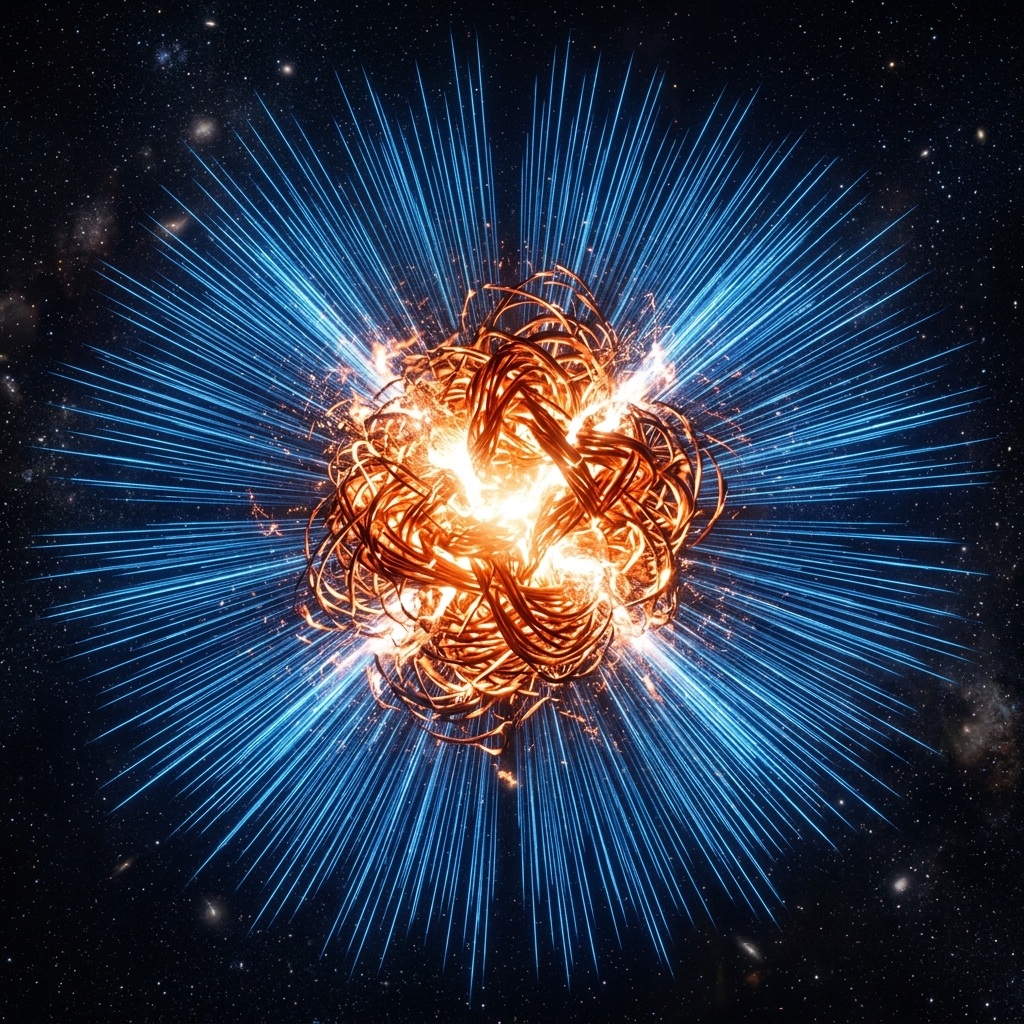
The "Big Bang" was the ultimate unspooling of a primordial super-knot. As chaotic geometry scattered outward, most helices unwound into the vacuum medium, while stable knots survived as matter. As the vacuum expands, its density drops, perfectly mimicking "Dark Energy" acceleration through decreasing cosmic friction.
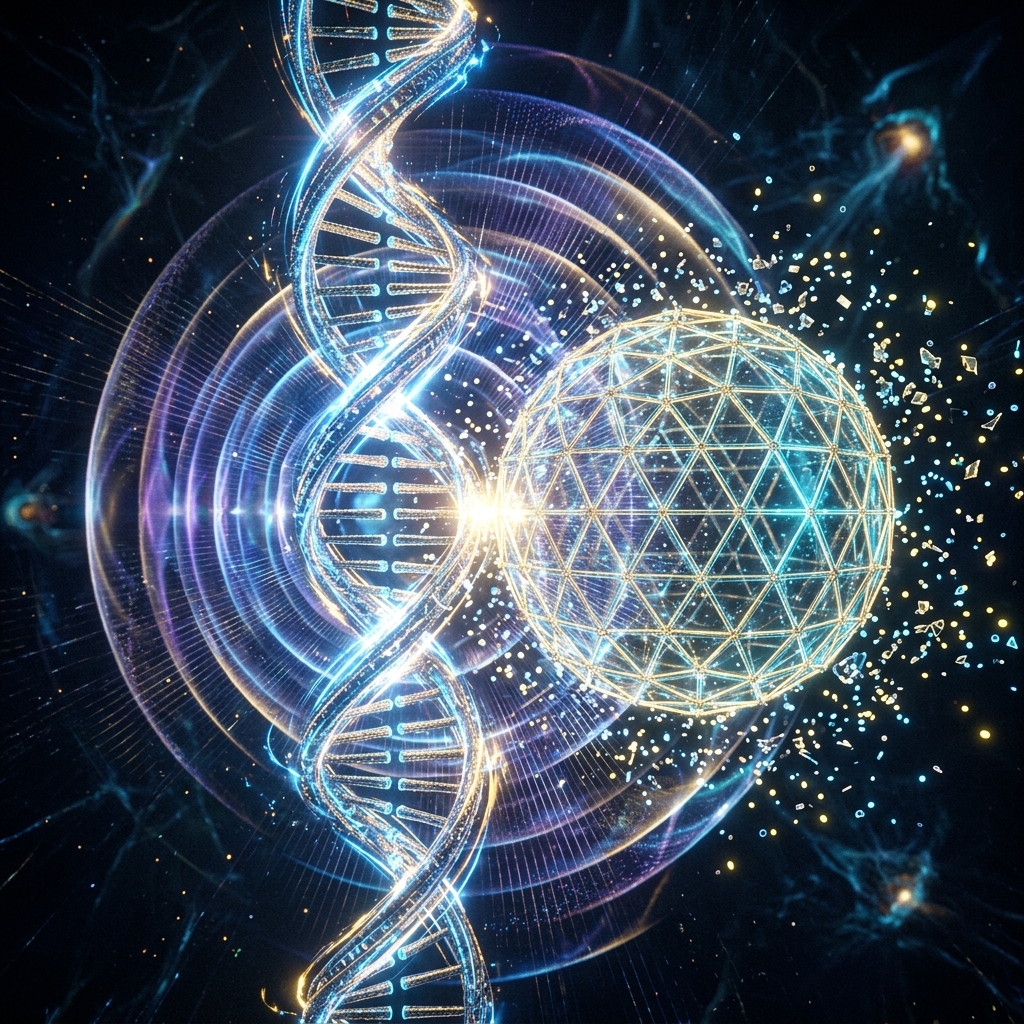
Biological shape is driven by macroscopic topological resonance fields (phonons) emitted by the DNA double helix. Cellular material doesn't "know" where to go; instead, like iron filings snapping to a magnetic field, it is physically guided into the low-friction nodes of this 3D geometric scaffold.
Official DOI: 10.5281/zenodo.20828225
Read the full academic manuscript containing rigorous mathematical proofs, theoretical expansions, and topological geometry.
Read Official Manuscript (.pdf)